
Neural DSP Parallax X for macOS
Description
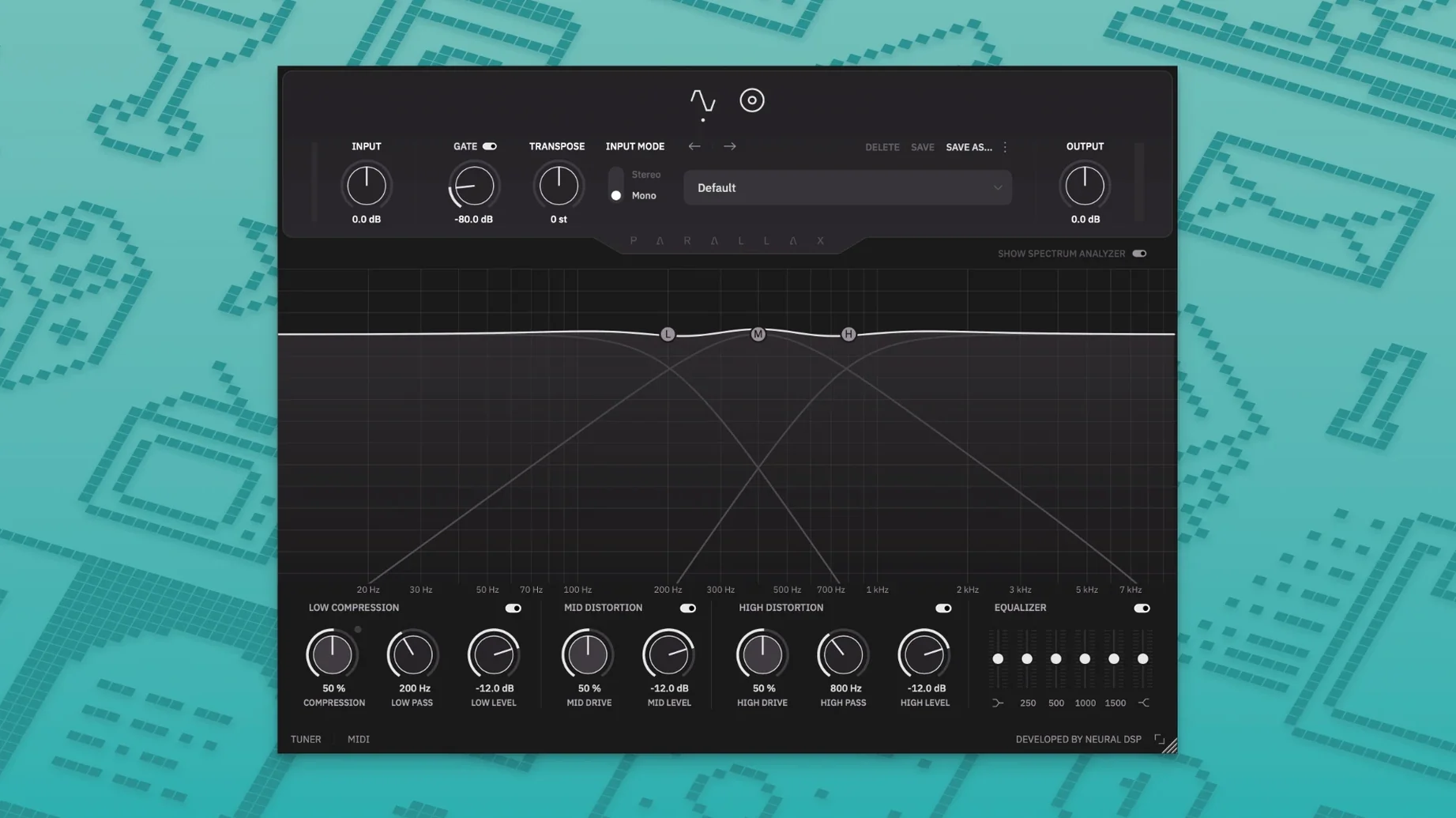
Three paths. That's the core of Parallax X. It splits your bass into low, mid and high bands right at the input, processes each one independently, then sums them back together. The low band gets a dedicated compressor voiced for bass. Mids and highs run through tube-modelled distortion and a cabinet simulator, leaving the low end untouched by the cab emulation.
The mid and high distortion can be driven separately. The tube modelling adds harmonics without turning the top end to fizz, and the six-band graphic EQ lets you carve out exactly where those harmonics sit. It's a fast way to add grit to a DI bass while keeping the fundamental solid.
A built-in tuner and standalone mode mean you can use it without a DAW. The spectrum analyser sits in the interface, so you're not guessing where the mud is. Presets give you a starting point, but the real control is in balancing the three bands against each other—push the highs for clank, pull the mids for warmth, or compress the lows until they sit still in the mix.
It works on Apple Silicon natively, and the installer puts Parallax X alongside any older Parallax version you already have. It's a separate plugin, so old sessions won't break.
Darkglass Ultra gives you pedal snapshots, not three-band sculpting
The bass processor space isn't exactly crowded, but there are three names that keep coming up alongside Parallax X.
Darkglass Ultra leans heavily into the pedalboard vibe. It models specific Darkglass hardware and gives you fewer bands to play with—essentially a clean blend plus a driven path. It's brilliant at that one aggressive, clanky sound. Parallax X pulls ahead when you need more surgical control. Having three fully independent bands with their own distortion character means you can dial in a grindy top without sacrificing midrange punch.
TSE BOD is a freebie that does one thing: it emulates the SansAmp Bass Driver. One knob for drive, one for blend, done. It's simple and it works. But there's no multiband trickery, no cab section, and no transposition. If you've ever tried to get a clean low end and crunchy highs out of BOD, you know the compromise—you're blending a distorted copy with a clean copy and hoping for the best. Parallax X doesn't ask you to hope.
Then there's the original Parallax. The older version lacks the transposition control, the live tuner, and the metronome. Its interface is clunkier, and the spectrum analyser in Parallax X is genuinely useful in a way the original never was. If you already own the first one, Parallax X feels less like an upgrade and more like the version that should have shipped first.
Dialing equal distortion across all bands buries the bass
Most of them come from treating it like a regular distortion plugin. Here's what goes wrong.
Driving all three bands equally. The whole point of the parallel design is contrast. If you set the low, mid and high distortion to the same level, you might as well use a single-band saturator. Keep the lows clean or lightly compressed, let the mids carry the note definition, and use the highs for presence. The magic happens in the imbalance.
Ignoring the cab section's routing. The cabinet emulation only touches the mid and high bands. That's by design. Beginners sometimes load an impulse response and wonder why the low end still sounds direct. It's not a bug—the low band bypasses the cab entirely.
Using the transposer as a permanent fix. Dropping a whole octave sounds huge for about thirty seconds. Then it turns your bass into a muddy rumble that fights the kick drum. Use it for occasional riffs or layered textures, not as an always-on effect.
Dialling in tone with the tuner active. The tuner mutes the output. More than one user has spent five minutes tweaking EQ while wondering why there's no sound.
Transpose moved pitch-shifting into the plugin without extra windows
Version 1.0.0 didn't just add features—it changed the workflow. The transpose control is the biggest practical shift. Moving a bassline up or down within an octave without opening a separate pitch plugin saves time during writing, and it works well enough for quick demos or doubling lines at different octaves.
The live tuner is a small but useful addition. You can check tuning without leaving the plugin window, which matters when you're recording a DI bass and don't want to break focus. The metronome in standalone mode turns Parallax X into a practice tool—not essential, but it means you can warm up through the plugin chain without booting a full DAW session.
The redesigned spectrum analyser is the quiet improvement that affects every session. It's clearer and faster than the old display, making it easier to spot resonant peaks before they reach the EQ stage. Combined with the new factory presets, the first-run experience is less intimidating than the original Parallax, which dropped you onto a blank panel and expected you to understand the signal flow immediately.
For anyone hunting down a neural dsp mac torrent or a neural dsp parallax crack, this version appearing as a separate plugin means no overwriting the old install. The legacy version sits right next to it, which keeps older projects safe while you try the new features.
What’s new
Adds Transpose, Live Tuner and Metronome features. Adds new factory presets and a revamped interface. Adds a redesigned Spectrum Analyzer.
Requirements
- macOS 11 or later
- Intel or Apple Silicon Mac
- 64-bit host or standalone
FAQ
Does Parallax X process the whole signal through the cabinet simulator?
No. The cabinet emulation is applied only to the mid and high frequency bands, leaving the low band clean.
Comments 0
Sign in or create an account to leave a comment.
No comments yet…
If you’ve installed it, say how it went. Mention your Mac and macOS version — it helps the next person more than you’d think.
More in VST Plugins
All in VST Plugins-
 Neural DSP Mantra
1.0.1
Apple Silicon
-
 Neural DSP Soldano SLO-100 X
1.0.0
Apple Silicon
-
 Neural DSP Archetype Rabea X
1.0.1
Apple Silicon
-
 Neural DSP Archetype Petrucci
1.0.0
Apple Silicon
-
 Neural DSP Archetype Cory Wong X
1.0.1
Apple Silicon
-
 Native Instruments Massive X
1.7.1
Apple Silicon
-
 noteGRABBER
2.0.0
Apple Silicon
-
 Nudist Audio Nudistort
1.2.5
Apple Silicon