
Addictive Keys for macOS
Description
Check it will run first
If your DAW already hums along on your machine, Addictive Keys should too. It needs macOS 10.13 or later and runs natively on both Intel and Apple Silicon Macs.
Pick your plug-in format
It slots into most major hosts. You get VST, VST3, AU and AAX versions in one installer, plus a standalone app if you just want to sit down and play.
Know what’s in the box
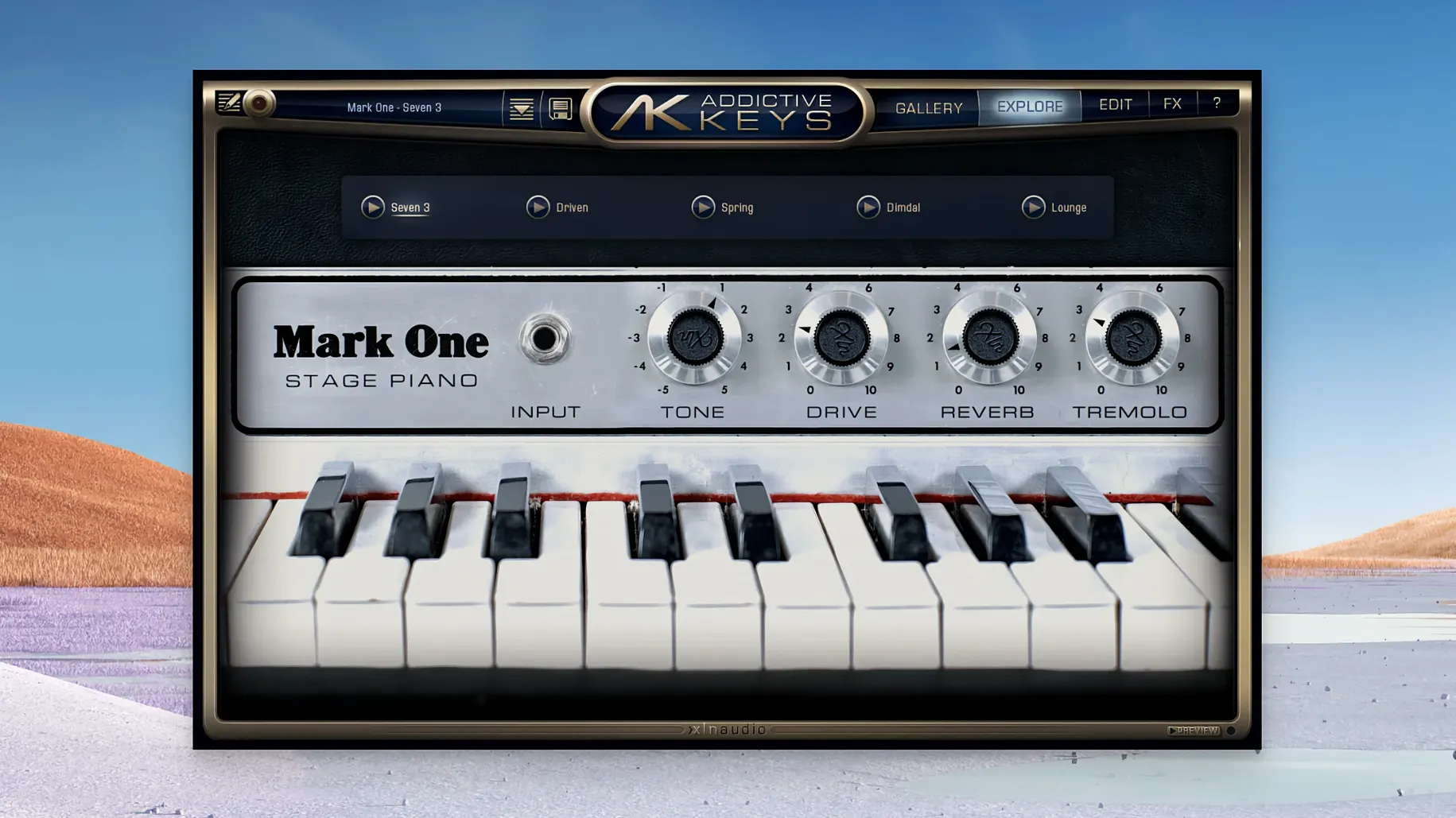
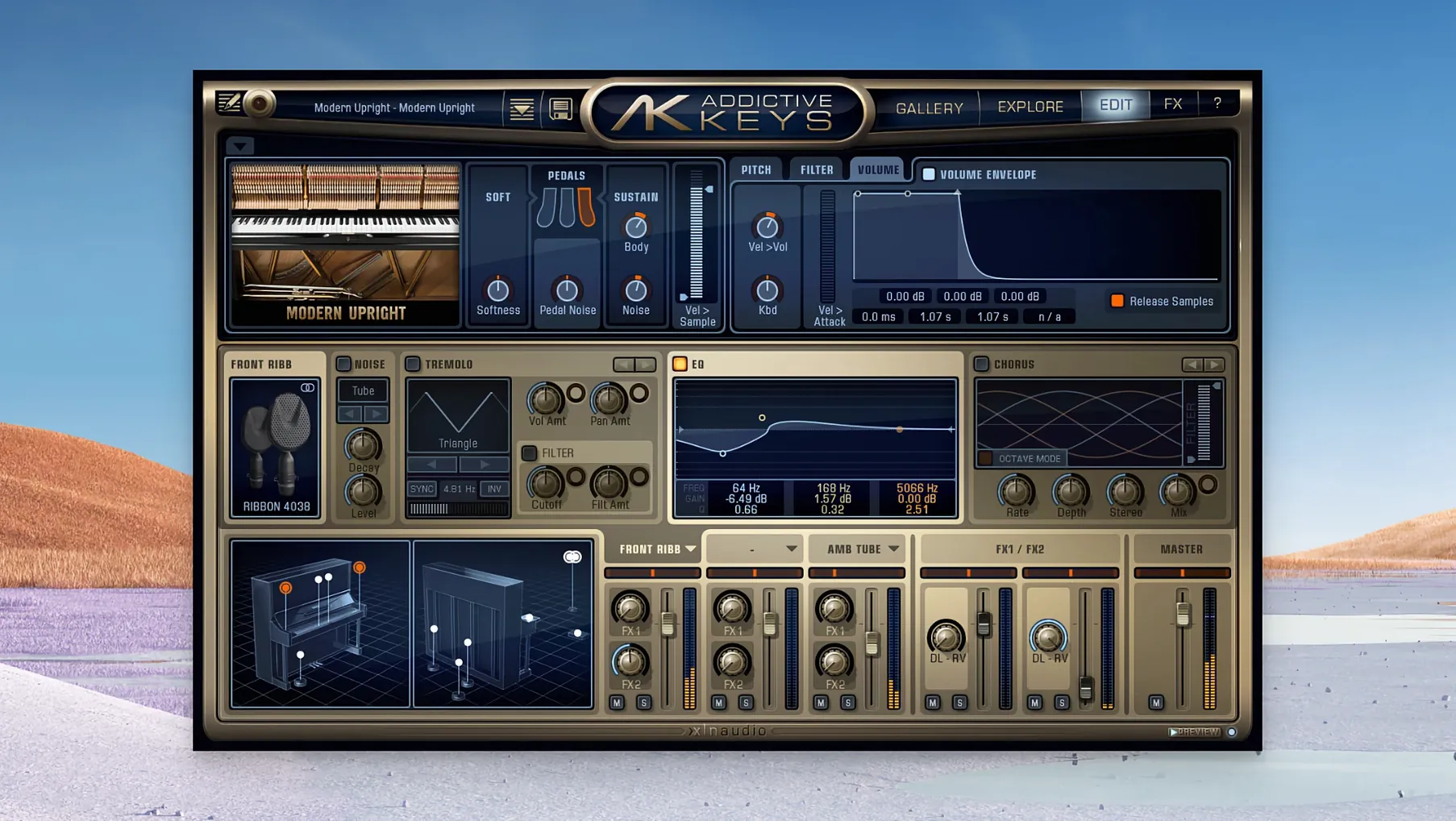
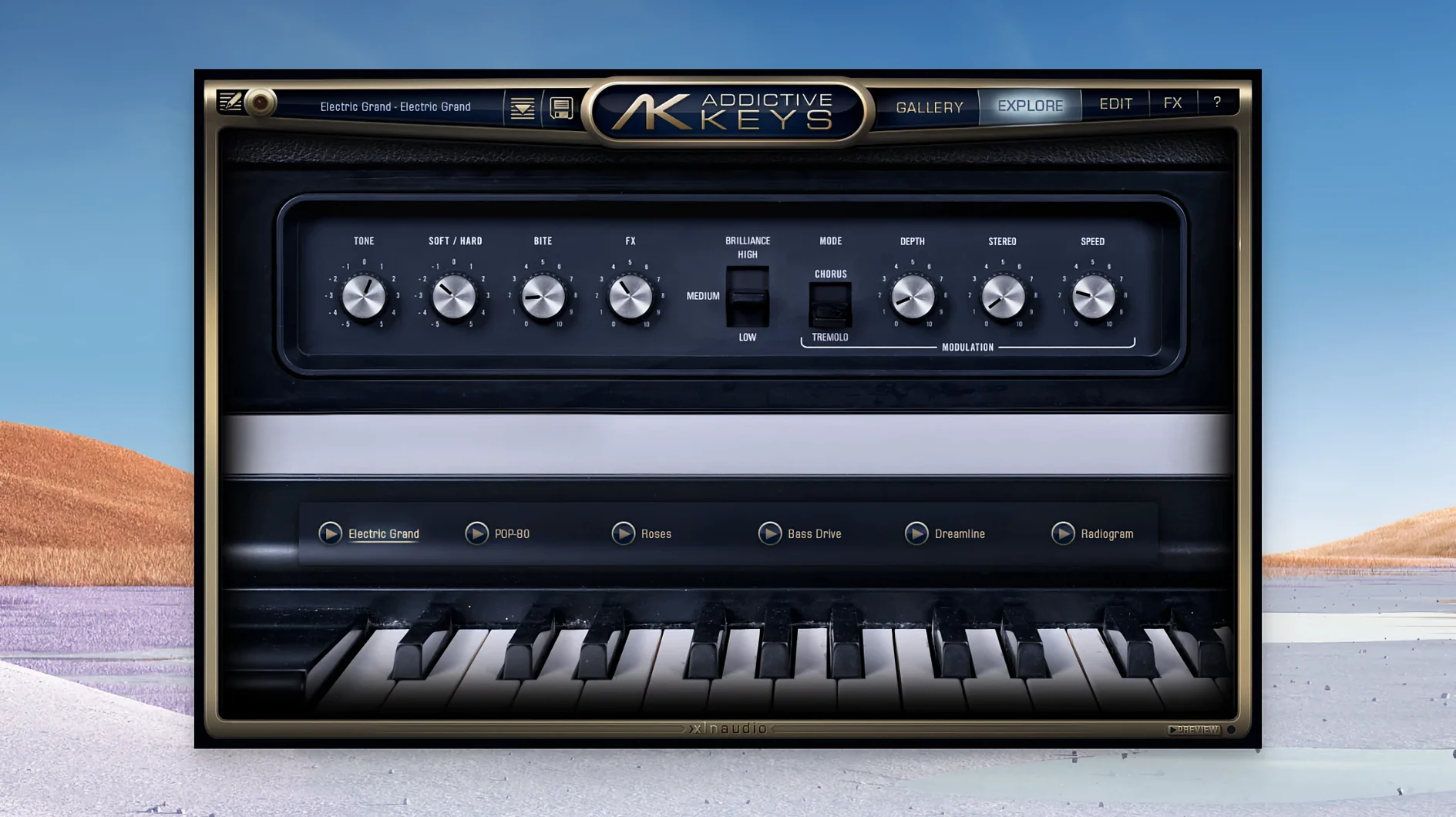
You get four instruments: two acoustic pianos and two electric pianos. The Mark One is modelled on a Rhodes Mk. 1 stage piano, and the Modern Upright takes after a Yamaha U3.
Why it loads faster and asks for less disk space than Keyscape
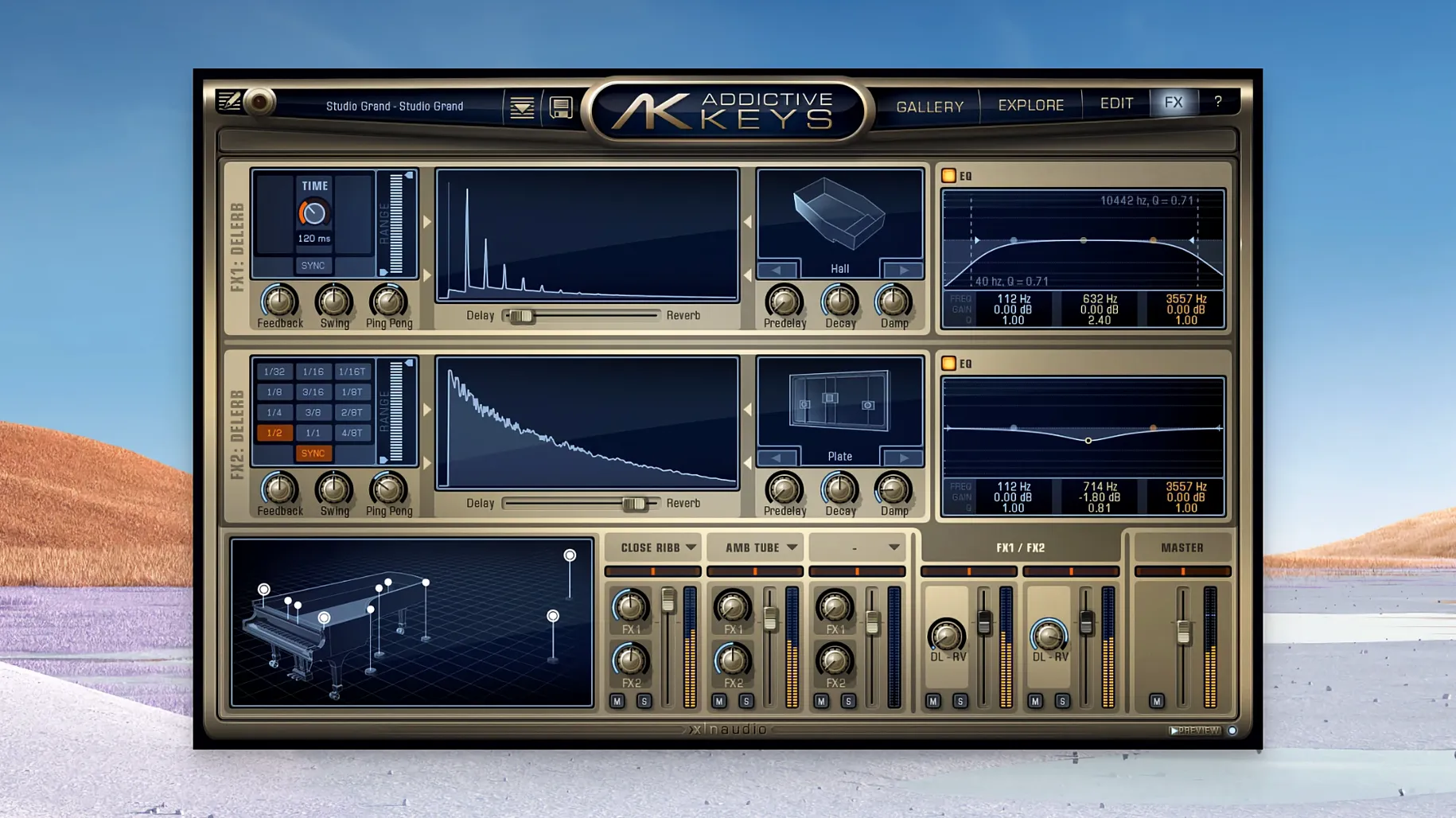
Keyscape is the obvious heavyweight in this space. It gives you dozens of keyboards, not four, and the detail in its sampled instruments is obsessive. But it also eats disk space for breakfast and the plugin loads noticeably slower. Addictive Keys is more focused — four instruments, small footprint, and you can spin the virtual mic positions without waiting for a progress bar.
Arturia’s Piano V uses physical modelling rather than samples. That means no velocity layers to worry about and a tiny install size. The trade-off is tone. Next to Addictive Keys’ Studio Grand, Piano V can sound a little synthetic in the upper octaves — fine in a busy mix, less convincing on a solo ballad.
Native Instruments’ The Gentleman upright has a lovely cabinet-resonance character but only gives you one piano. If you write across genres, a single-instrument library gets restrictive. Addictive Keys gives you four distinct boards in one package, which covers far more ground without juggling separate plugins.
A songwriter’s late-night session
Picture someone writing a soul track at 1 a.m., headphones on, no live room available. They pull up the Mark One in a Logic session and dial back the tine noise a notch with the tone control. The onboard tremolo gets pushed to about a quarter depth — enough movement to fill out the verse without pulling focus from the vocal. Then they switch to the Modern Upright for the bridge, keeping the same reverb send so the two pianos feel like they belong in the same room. Thirty minutes later they have a piano track that sounds like it was recorded in an actual studio, not a bedroom.
That ability to flip between contrasting instruments while keeping the same spatial treatment is where Addictive Keys earns its keep. You are not loading a new plugin, waiting for samples, or messing with routing. You swap the instrument patch and carry on writing.
Blending the hidden room mics for instant space
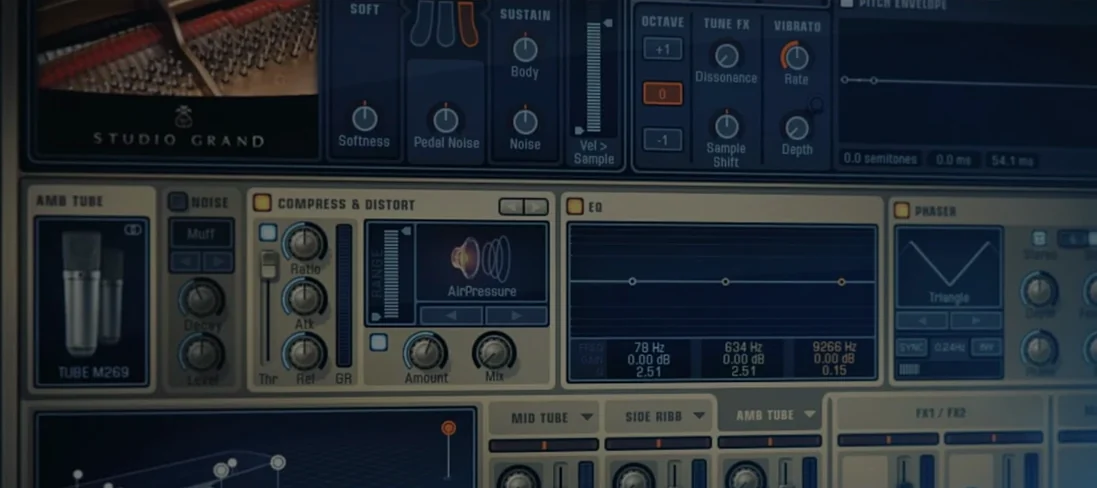
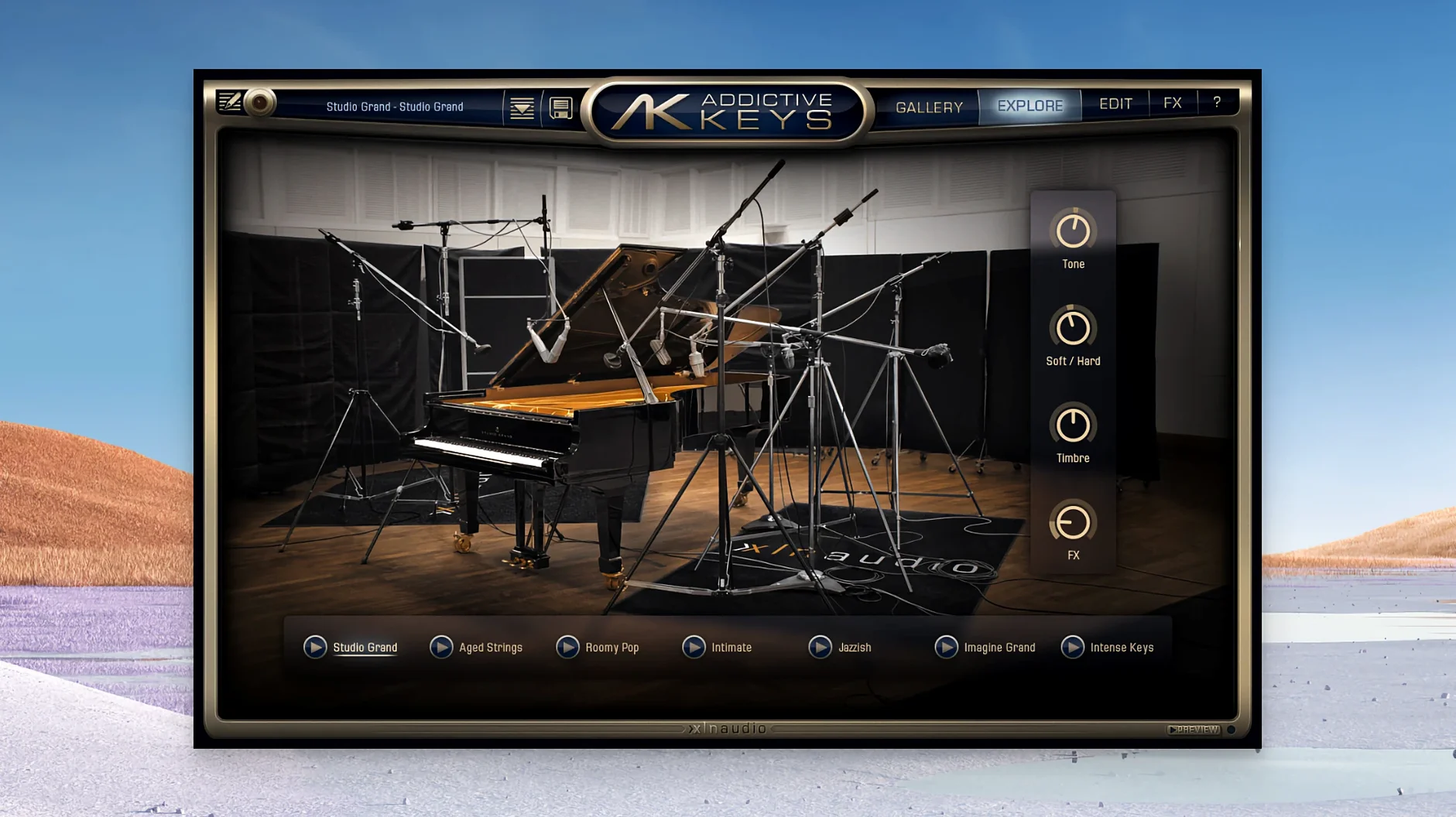
Ignoring the mic presets. A new user often loads the default close mics and leaves it there. The room and ambient mic pairs are half the sound — blending them in even slightly gives the piano a sense of space that EQ cannot fake. The stereo width knob is worth a tweak too, especially if the track already has wide synths.
Playing every chord at velocity 127. Sampled pianos expose this habit mercilessly. Addictive Keys’ velocity layers are well mapped, but you will still hear the jump from mellow to clangy if you hammer everything. Dialling back the MIDI velocity curve in your DAW or just playing with a lighter touch transforms the Studio Grand into a much more expressive instrument.
Using the same instrument for everything. It is tempting to pick one piano and stick with it across a whole project. But the scripts don’t fight each other — you can have the Mark One on a verse, the Electric Grand on a chorus, and the Modern Upright doubling a bassline, all from the same plugin instance. That keeps your CPU load down and your arrangement tighter than running three separate instrument tracks.
Over-processing before you choose a sound. Beginners sometimes slap on a channel strip of EQ and compression before auditioning the presets. Addictive Keys’ built-in tone shaping and compressor are designed for the source material. Get the sound right at the instrument level first, then add channel processing only if the mix demands it.
Requirements
- macOS 10.13 or later
- Intel and Apple Silicon Macs
FAQ
Does Addictive Keys work as a standalone instrument?
Yes. A standalone version is included, so you can play without opening a DAW.
What piano models are in the collection?
You get two acoustic pianos and two electric pianos. The electric set includes the Mark One, based on a Rhodes Mk. 1 stage piano.
Comments 0
Sign in or create an account to leave a comment.
No comments yet…
If you’ve installed it, say how it went. Mention your Mac and macOS version — it helps the next person more than you’d think.
More in VST Plugins
All in VST Plugins-
 Addictive Drums 2
2.9.1
Apple Silicon
-
 Ample Guitar M
4.1.0
Apple Silicon
-
 Ample Sound Ample Guitar LP III
4.0.1
Apple Silicon
-
 Arturia Analog Lab V
5.12.0
Apple Silicon
-
 Arturia Efx AMBIENT
1.0.0
Apple Silicon
-
 Arturia Emulator II V
1.6.2
Apple Silicon
-
 Arturia FX Collection
2026.02
Apple Silicon
-
 Arturia Mellotron V
1.9.3
Apple Silicon